Looking for a Used Ram Cummins? Here Are 10 Things You Should Check First
A used Ram Cummins can be an excellent work truck, tow rig, or daily driver: but a clean exterior and a strong-sounding engine do not tell the whole story. These trucks can accumulate serious mileage, heavy towing duty, aftermarket tuning, and years of skipped maintenance before they reach the used market.
That is why a professional pre-purchase inspection is worth doing before you hand over your money. Whether you are considering a 5.9 Cummins or a 6.7 Cummins, the right inspection can uncover expensive problems with the engine, fuel system, transmission, emissions equipment, chassis, and electronics.
If you are shopping around Jersey Shore, PA, Dirty D’s Performance can help you evaluate the truck before you buy it. Here are the ten areas that deserve the closest attention.
1. Check Engine Health and Blow-By
Start with the basics: how does the engine start, idle, and respond under load?
Whenever possible, inspect the truck with the engine completely cold. A seller who warms it up before you arrive may be trying to hide hard starting, excessive smoke, or unusual noises. A healthy Cummins should start without excessive cranking and settle into a relatively smooth idle.
Pay attention to:
- Hard starting when cold or warm
- Excessive white, blue, or heavy black smoke
- Rough idle, misses, or inconsistent RPM
- Knocking, rattling, or unusual valvetrain noise
- Oil leaks around the front cover, valve cover, or rear of the engine
- Loss of power during acceleration
- Excessive crankcase pressure or blow-by
Some blow-by is normal on a high-mileage diesel. The concern is excessive pressure that pushes vapor forcefully from the crankcase breather or causes the oil fill cap to lift noticeably when loosened. A blow-by check should be treated as one part of the inspection: not a stand-alone pass-or-fail test. Engine age, oil temperature, mileage, and previous repairs all matter.
A compression concern, worn rings, damaged cylinders, or an engine that has been heavily abused can turn a seemingly good purchase into a major repair. A thorough Cummins engine inspection and repair can provide a much clearer picture.
2. Inspect the Fuel System: CP3, CP4, Lift Pump, and Injectors
Fuel system condition is one of the most important parts of any Cummins inspection.
Most 5.9 Cummins trucks use a CP3 high-pressure pump, as do many 6.7 Cummins models. Some later 6.7 Ram trucks were equipped with a CP4 pump, so confirm exactly what is installed by checking the model year, VIN-specific records, and the pump itself. If you are looking at a truck that may have originally used a CP4, verify whether any applicable factory campaign or pump replacement has been completed.
Check for:
- Hard starting or extended cranking
- Low power under acceleration
- Surging or unstable idle
- Fuel rail pressure codes
- Excessive injector return flow
- Fuel leaks around the pump, filters, or lines
- Water or debris in the fuel filter
- Lift pump replacement or fuel supply upgrades
A weak lift pump can starve the high-pressure pump and contribute to premature fuel system wear. Worn injectors can also create hard starts, rough running, smoke, and low rail pressure. These symptoms can overlap, so replacing parts based only on a code or a seller’s guess is not enough.
A proper Cummins fuel system inspection may include checking supply pressure, reviewing rail pressure data, inspecting the filters, and testing injector performance. Fuel system repairs can become extremely expensive if contamination from a failed high-pressure pump reaches the injectors and lines.
3. Evaluate the Transmission and Service History
A reliable Cummins engine does not make a truck a good buy if the transmission is worn out.
Depending on the truck, you may find a 68RFE automatic, an Aisin automatic, or a manual transmission. The 68RFE deserves especially careful attention on trucks that have been tuned, used for heavy towing, or driven aggressively. An Aisin is generally associated with heavier-duty applications, but it still requires regular service and can suffer from neglect.
During the road test, watch for:
- Delayed engagement when selecting Drive or Reverse
- Harsh shifts or slipping
- RPM flare between gears
- Shudder during torque converter lockup
- Unusual shift hunting
- Transmission temperature problems
- Fluid leaks or burnt-smelling fluid
- Gear-ratio or pressure-related fault codes
Test the truck at low speed, on the highway, and under moderate acceleration. If possible, include an incline or load simulation. Ask for documentation of fluid and filter services rather than relying on “it was serviced regularly.”
Dirty D’s provides transmission repairs and service, including diagnostics, fluid and filter work, torque converter service, and larger repairs when needed.
4. Look for the 6.7 Cummins Grid Heater Bolt Problem
The grid heater helps with cold starting, but certain 6.7 Cummins intake assemblies have a known concern involving the grid heater bolt. If the bolt loosens, it can enter the intake and potentially cause severe internal engine damage.
When inspecting a 6.7, ask whether the grid heater assembly has been inspected or whether a preventive fix has been installed. Look for evidence of previous intake work, damaged fasteners, corrosion, or aftermarket hardware.
Also check for:
- Hard cold starts
- Grid heater or relay fault codes
- Corroded electrical connections
- Damaged wiring or heater terminals
- Signs that the intake has been removed
This is not an issue to ignore simply because the truck currently runs well. A pre-purchase inspection should identify the condition of the assembly and document whether preventive work is recommended.
5. Inspect the Turbocharger and Charge-Air System
Turbocharger problems can be expensive, but many boost issues begin with something simpler, such as a damaged boot, loose clamp, or cracked charge pipe.
Inspect the turbocharger for excessive shaft play, oil accumulation, damaged connections, and signs of contact between the compressor wheel and housing. Some oil residue in the charge-air system can be normal, but heavy oil pooling or oil around a loose connection deserves further investigation.
During the road test, listen for:
- A sudden change in turbo whistle
- Hissing or whooshing under acceleration
- Surging
- Slow boost response
- Reduced power
- Excessive smoke
- A check-engine light under load
On many 6.7 Cummins trucks, the variable-geometry turbocharger and actuator also require attention. A scan tool can help compare commanded and actual boost while checking for actuator-related faults. A truck with a modified turbo or aggressive tune deserves an even closer inspection.
6. Check the Cooling System and Head Gasket Warning Signs
Cooling system problems should never be dismissed as “just an old hose.” Overheating or combustion pressure in the cooling system can lead to serious engine damage.
Before the test drive, inspect the coolant level and condition. Look for dried coolant around the radiator, water pump, hoses, thermostat housing, and: on applicable 6.7 models: the EGR cooler area. Oil contamination in the coolant or coolant contamination in the oil is a major warning sign.
During inspection, watch for:
- Unexplained coolant loss
- Overheating
- Pressurized upper radiator hoses shortly after startup
- Bubbles in the coolant reservoir
- White exhaust smoke after warm-up
- Sweet exhaust odor
- Dried coolant residue
- A history of head gasket or EGR cooler repairs
A shop can perform a cooling system pressure test and, when appropriate, a combustion-gas test. These checks are much more useful than simply looking at the coolant reservoir and deciding that everything appears normal.
7. Verify the DPF and Emissions System Status
The 5.9 Cummins generally predates the emissions equipment found on later 6.7 trucks. On a 6.7, inspect the DPF, EGR system, SCR/DEF system, sensors, and related wiring.
Ask the seller:
- Does the truck regenerate normally?
- Has it entered limp mode?
- Has the DPF ever been cleaned or replaced?
- Have the EGR valve, EGR cooler, NOx sensors, or DEF components been repaired?
- Is the emissions system complete and unmodified?
Look for warning lights, frequent regeneration requests, reduced-power messages, abnormal exhaust odor, and evidence of deleted or improperly modified equipment. Emissions tampering can create reliability, inspection, legal, and resale problems.
A diesel truck that spends most of its life idling or making short trips may have more aftertreatment stress than one regularly driven at operating temperature. Scan data and service records can help show whether the system has been maintained properly.
8. Inspect the Frame, Suspension, Steering, and Driveline
A strong engine cannot compensate for a rusted frame or worn-out chassis.
Place the truck on a lift if possible and inspect the frame from front to rear. Pay close attention to rust, cracks, poorly repaired collision damage, damaged crossmembers, and areas around suspension and steering mounts. Trucks from regions that use road salt may have hidden corrosion underneath an otherwise clean body.
Check the:
- Ball joints
- Tie rods
- Track bar
- Control arms
- Shocks
- Leaf springs and shackles
- Wheel bearings
- U-joints
- Carrier bearing
- Differential housings and seals
- Steering box mounting area
During the road test, note wandering, vibration, clunks, pulling, uneven tire wear, or steering shake. A lift inspection often reveals wear that cannot be seen from the driver’s seat.

9. Perform Complete Electrical and Computer Diagnostics
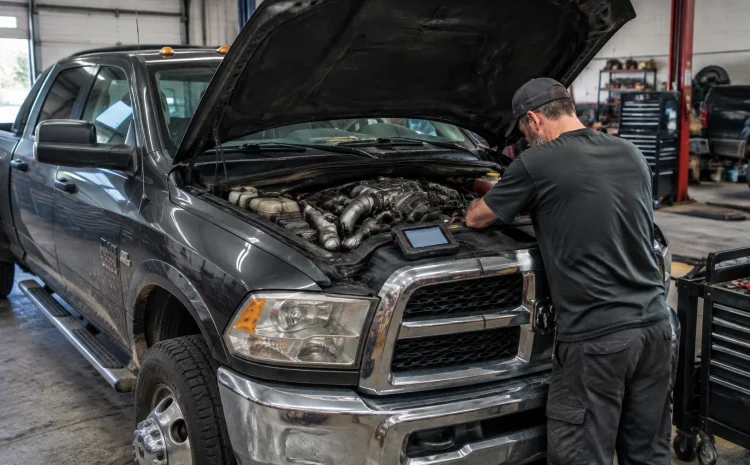
A basic code reader is not enough for a modern Ram Cummins. A proper inspection should use equipment capable of reading engine, transmission, ABS, body, and emissions modules.
The technician should look for active, pending, and historical codes: not just whether the check-engine light is currently off. A seller may clear codes shortly before showing the truck, so readiness monitors and module history can provide useful clues.
Diagnostic checks may include:
- Commanded versus actual fuel rail pressure
- Injector balance or contribution data
- Turbo actuator operation
- Transmission temperature and shift data
- DPF soot load and regeneration history
- EGR and DEF system faults
- Battery and charging system voltage
- Evidence of recent code clearing
- Aftermarket tuning or altered calibration
Professional Cummins diagnostics can uncover problems that a visual inspection and short test drive may miss.
10. Review Maintenance Records Before You Commit
Maintenance records are one of the best indicators of how a used diesel truck was treated.
Look for documentation showing:
- Regular engine oil and filter changes
- Fuel filter replacement
- Lift pump or injector service
- Transmission fluid and filter service
- Cooling system maintenance
- Differential and transfer case service
- Grid heater inspection or repair on 6.7 models
- Turbocharger or actuator work
- DPF, EGR, DEF, and sensor repairs
- Previous tuning or performance modifications
No records do not automatically mean the truck is bad, but they should affect the price and your inspection strategy. A truck with a long service history is easier to evaluate than one supported only by verbal promises.
Be especially cautious when the seller says the truck has “never needed anything” despite high mileage, heavy towing use, or extensive modifications. The absence of repair records is not proof that repairs were unnecessary.
Protect Your Purchase with a Professional Inspection
Buying a used Ram Cummins should not be based on appearance, sound, or a short drive around the block. The real condition of the truck is found in its fuel data, service history, transmission behavior, cooling system, emissions equipment, chassis, and stored diagnostic information.
Whether you are considering a 5.9 Cummins or a 6.7 Cummins, Dirty D’s Performance can help you make a more informed decision. Our diesel performance shop in Jersey Shore, PA, specializes in Cummins repair, diesel truck repair, fuel system service, transmission service, and diagnostics for Dodge and Ram platforms.
Before you finalize the deal, schedule an appointment with Dirty D’s Performance or contact the shop to arrange a pre-purchase inspection. Spending a little on professional evaluation now can help you avoid buying someone else’s expensive repair bill.