

7 Mistakes You’re Making with Cummins Diagnostics (and How to Fix Them)
Owning a Cummins-powered truck is a bit like owning a high-performance athlete. These engines are legendary for their grit, pulling power, and longevity. However, even the toughest athlete needs a specialized doctor when things start to feel “off.” When that “Check Engine” light illuminates or you notice a drop in boost, your first instinct is to find out why.
But here is the catch: diagnosing a Cummins isn’t just about reading a code; it’s about understanding the language of a complex machine. At Dirty D’s Performance, we see many well-intentioned owners try to tackle their own troubleshooting, only to end up frustrated and deeper in the hole. Think of your diagnostic process like a tailored suit: if it doesn’t fit your specific engine’s needs, it’s not going to look or perform right.
If you’re a truck owner who prides yourself on knowing your rig, let’s look at the seven most common mistakes made during Cummins diagnostics and how you can steer clear of them to keep your powerhouse running strong.
1. Relying on Generic “Off-the-Shelf” Scan Tools
It’s tempting to grab a $40 code reader from the local auto parts store. You plug it in, it gives you a generic “P-code,” and you think you’ve got the answer. This is the equivalent of using a magnifying glass when you really need a microscope.
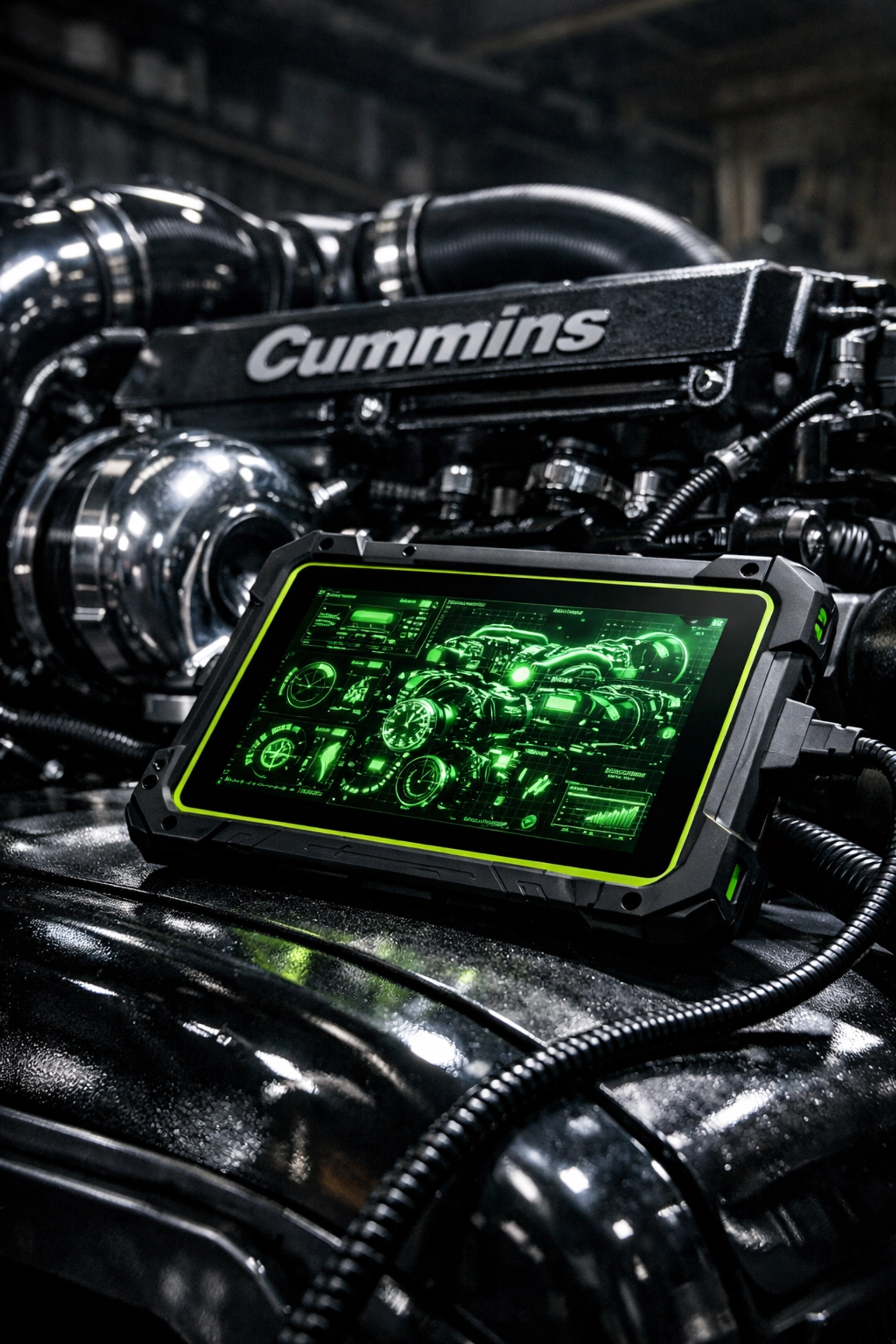
Generic scanners often miss manufacturer-specific data pids (parameter IDs) that are crucial for Cummins engines. They might tell you a sensor is “out of range,” but they won’t tell you why. A professional-grade tool or manufacturer-specific software provides a window into the engine’s “brain” (the ECM) that generic tools simply cannot access.
How to Fix It: Invest in: or find a shop that uses: professional diagnostic software. This allows for real-time monitoring of fuel rail pressure, turbo vane position, and exhaust backpressure. If you want to ensure your truck gets the “tailored suit” treatment, it starts with the right data.
2. Ignoring the “Nervous System” (Wiring and Connections)
We often see owners jump straight to replacing expensive components like turbos or injectors because a code pointed in that direction. However, the real culprit is often the “nerves” connecting those parts. In the high-heat, high-vibration environment of a diesel engine bay, wiring harnesses can become brittle, and connectors can corrode.
Think of it like a lightbulb in your house. If the bulb doesn’t turn on, you don’t immediately rewire the whole room: you check if it’s plugged in or if the wire is frayed. Cummins sensors are incredibly sensitive; even a tiny amount of corrosion on a terminal can send a “ghost” signal to the ECM.
Practical Example: You might get a code for a faulty MAP sensor. You replace the sensor, but the light stays on. The real issue? A pinched wire in the harness rubbing against the block.
- The Fix: Before buying parts, perform a thorough visual inspection. Look for frayed wires, “green crusty” corrosion in connectors, and loose grounds. General maintenance often uncovers these issues before they become breakdowns.
3. The “Parts Cannon” Approach
This is perhaps the most expensive mistake a truck owner can make. When you start throwing parts at a problem without a confirmed diagnosis, you’re playing a guessing game where the house usually wins.
Diagnostics should be a systematic investigation, much like a detective solving a case. Replacing a $3,000 set of injectors because you have a rough idle: without first checking fuel pressure or performing a contribution test: is a gamble. At Dirty D’s, we believe in maximizing Cummins engine performance through precision, not guesswork.
Deeper Dive: The Systematic Method
- Verify the Symptom: Does it happen only when cold? Under load?
- Check the Basics: Air filter, fuel filter, oil level.
- Data Log: Watch how the engine behaves while the fault is occurring.
- Isolate the Component: Test the specific part before condemning it.
4. Overlooking Fuel Quality and Filtration
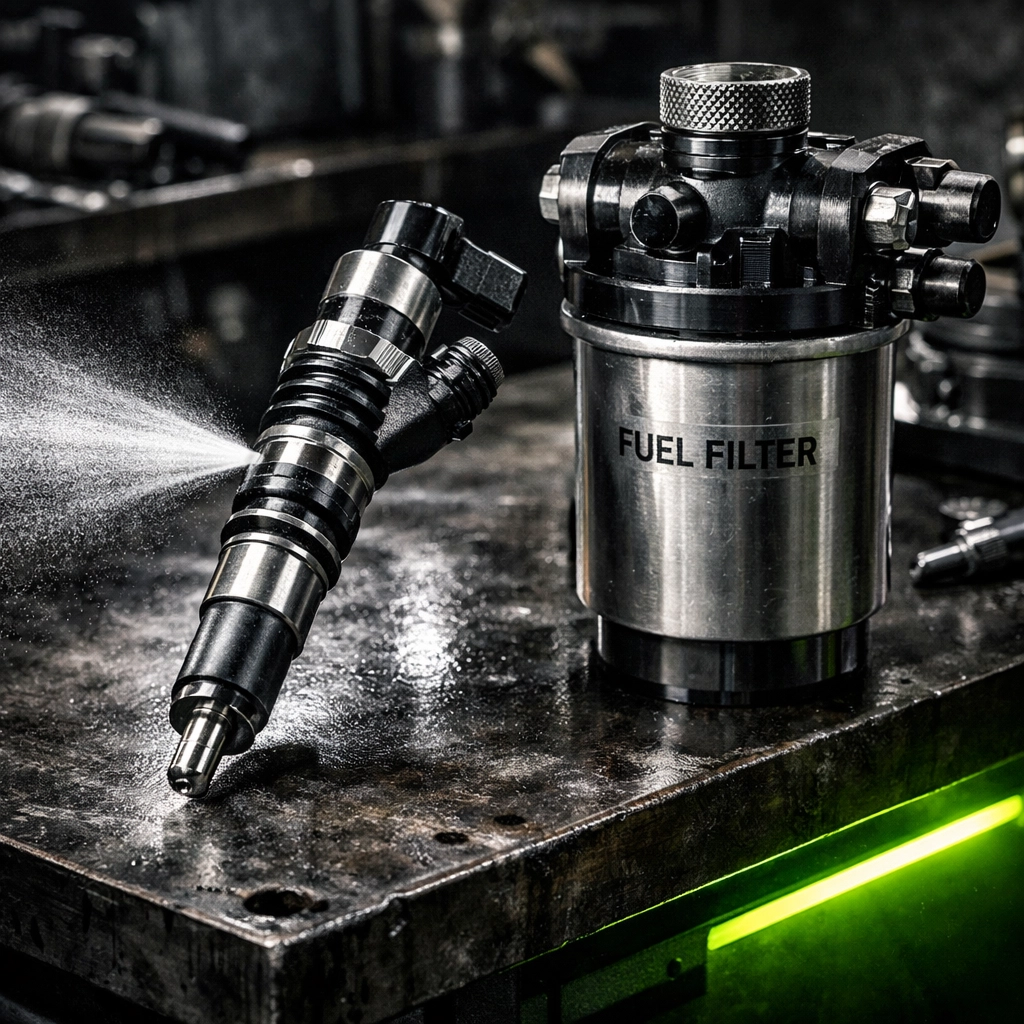
Your Cummins’ fuel system is a marvel of engineering, capable of injecting fuel at pressures exceeding 30,000 PSI. At these levels, even microscopic contaminants act like liquid sandpaper. Many “engine” problems are actually fuel system problems in disguise.
If you aren’t checking for fuel contamination or air in the lines, you’re missing a huge piece of the puzzle. A clogged fuel filter can mimic a failing lift pump or even an injector issue.
How to Fix It: Always start your diagnostic journey by checking your filters. If you notice a loss of power or hard starting, review the signs you need fuel system maintenance. Keeping the “lifeblood” of your truck clean is the easiest way to avoid a massive repair bill.

5. Misinterpreting “Low Boost” Symptoms
When a Cummins loses its “whistle,” the immediate assumption is often a blown turbocharger. While turbos do fail, a “low boost” code is frequently caused by something much simpler: a boost leak.
Imagine trying to blow up a balloon with a small pinhole in it. No matter how hard you blow (how much the turbo spins), the balloon won’t stay inflated. A cracked intercooler boot, a loose clamp, or a leaking EGR gasket can all cause your engine to lose its breath.
How to Fix It: Perform a “boost leak test” using a pressure adapter. By pressurizing the intake system while the engine is off, you can hear exactly where the air is escaping. This simple test can save you from replacing a perfectly good turbocharger. If the turbo is indeed the issue, truck work should be handled by experts who understand the nuances of VGT (Variable Geometry Turbo) calibration.
6. Neglecting the Cooling System’s Impact on Performance
We often think of the cooling system only when the temperature needle hits the red. However, modern Cummins ECMs are programmed to “derate” (cut power) if they sense the engine is getting too hot: even before it fully overheats.
If you’re experiencing an intermittent loss of power during heavy hauling, your diagnostic path should include the cooling system. A slipping fan clutch or a partially clogged radiator might not cause a boil-over, but it will cause the computer to pull back on the reins to protect the engine.
A Neighborly Analogy: Think of your radiator like your engine’s lungs. If you try to run a marathon while breathing through a straw, you’re going to slow down long before you pass out. Keeping those “lungs” clear is vital for heavy-duty hauling.
7. Forgetting the Aftertreatment System
On newer Cummins models, the exhaust system is almost as complex as the engine itself. Mistakes are often made by treating DPF (Diesel Particulate Filter) or SCR (Selective Catalytic Reduction) issues as isolated problems.
In reality, the aftertreatment system is a mirror of engine health. If your DPF is constantly clogging, the “mistake” is cleaning the filter without asking why it got dirty. Is the engine running too rich? Is there an oil leak in the turbo? Diagnosing the exhaust without looking at the engine’s combustion efficiency is only fixing the symptom, not the disease.
How to Fix It: Look at the relationship between your exhaust repairs and your engine’s tune. A healthy engine produces less soot, which leads to a happier aftertreatment system.
Your Partner in Performance
At Dirty D’s Performance, we don’t just clear codes; we solve problems. We treat every truck that enters our shop as if it were our own, providing the “pit crew” expertise you need to stay on the road. Whether you’re dealing with a mysterious electrical gremlin or you’re ready to take your Cummins engine repairs to the next level, we’re here to help.
Don’t let a diagnostic mistake turn into a mechanical disaster. If your truck is acting up and you want an expert eye to ensure the job is done right the first time, contact us today. Let’s get your Cummins back to peak performance together.